Monday, 22 August 2022

Glenlivet Caribbean Reserve

So Glenlivet's PR people very kindly got in touch to ask if I'd like to sample the Caribbean Reserve, a No Age Statement expression partly finished in rum barrels and expressly intended for cocktails. 

This whisky stands at the intersection of three trends in Scotch Whisky: it's a No Age Statement whisky, it's been (part) matured in something other than bourbon or sherry barrels, and it's meant to be mixed.

Distillers have been under pressure to keep up with demand for over a decade now, as the latest long boom continues. One common response has been to abandon age statements, preferring instead to blend casks to a flavour profile. Modern cask management techniques, as developed for example by Dr Jim Swan, allow distillers to send younger whisky to market - younger, but still properly matured.

The wider boom in brown spirits (how many new craft distillers are there in the USA?) means that there is ever greater competition to secure a supply of good quality casks. This has lead the Scotch industry to fill into ever more unlikely barrel types. These days it seems that even tequila casks fit the SWA's definition of "traditional". Rum, by comparison, is positively mainstream.

And the third trend is that of using Scotch in mixed drinks. Now, I'm a great enthusiast of Scotch cocktails (here's me, for example, on Roy Duff's most excellent YouTube channel Aqvavitae doing all sorts of tasty things. Or at least, mostly tasty.) I'm not so sure that this trend is a strong or as widespread as the other two. It feels a bit like the annual declaration somewhere in the drinks trade press that This Is The Year Of Sherry. But nevertheless.

So this No Age Statement Glenlivet, partly finished in rum casks, and explicitly presented as a cocktail ingredient, definitely sits at the crossroads of these three trends. 

Along with the bottle, Glenlivet sent me a list of suggested serves. I tried two of these, although of course I also sipped the malt neat - this blog is Smell The Malt, after all. Here's a quick rundown of the drinks and how they tasted.

The dram itself
It's immediately Glenlivet, with the signature green pear notes. It's sweet - sweeter than the flagship Glenlivet Reserve? I think so (but didn't have any to hand to make the comparison). But where's the rum?

The Caribbean Cooler
(50ml Glenlivet Caribbean Reserve, 25ml Pineapple juice, 2 dashes Angostura bitters. Build in an ice filled glass and top with peach flavoured sparkling water)

This was blooming delicious. As you can see from the picture it was a hot, hot day, and this went down a real treat.

Coco Breeze
(2 parts Glenlivet, 1.5 parts coconut water, 2 lime wedges, 0.5 parts simple syrup, 8 mint leaves. Build in a tin shaker. Muddle & then shake. Pour into an ice filled hiball and top with coconut water. Garnish with lime and mint)

For me the whisky got lost in this one. I enjoyed the drink, but it was a bit out of focus.

Conclusion
This is a very easy going dram. A good party whisky. A drinker not a thinker. And I enjoyed both of the suggested serves that I tried. But, I do think, if you're going to market a whisky as a Caribbean Reserve, you should probably use more, and more active, rum casks. I've just finished judging the 2022 World Cider Awards and one of the conversations we had over and over again in the Flavoured category was exactly about this. If it says Blueberry on the label, the consumer rightly expects to find blueberry flavour. If it says "finished in rum barrels", it ought to taste like it.

Thank you to Glenlivet for providing the sample bottle. If you'd like to read more about making cocktails with Glenlivet, here you go.

Friday, 12 November 2021

Bruichladdich Biodynamic Project

Last week I attended the Glasgow launch of Bruichladdich's new Biodynamic malt at Rémy Cointreau's offices in Blythswood Square.

There were wonderful canapés provided by Fallachan (that Chicken of the Wood - good lord what a flavour), excellent mixed drinks by (my colleague) Danny McManus, and I had several fascinating conversations with different 'Laddie folks around the topics of biodynamics and sustainable agriculture. We even drifted slightly into terroir territory. But most importantly, we tasted the whisky.


We were joined from the Bruichladdich distillery by head distiller Adam Hannett, who talked us through the growing of the barley and the making of the whisky.

Here are the facts I found most interesting or important about this new whisky:

  • Biodynamically grown barley gave Bruichladdich higher yields than conventionally grown crops of the same variety.
  • The whisky making isn't biodynamic, just the farming of the barley itself. Adam says that, with Bruichladdich making so many different expressions, they prefer to keep the brewing and distilling processes the same, since they're focused on barley varieties, locations (the T-word again), and barrel type. Although he's not ruling out future experiments with yeasts...
  • As yet, Bruichladdich doesn't have any Scottish biodynamic growers, so for this cuvée they sourced the barley from Yatesbury House Farm in Wiltshire. It's their only expression not made with Scottish barley, and I did rather get the impression that Bruichladdich is a little unsure of how their fans and followers will respond to that point of difference.

Tasting Notes

This is a cask sample at 55%, whereas the finished product will be bottled at 50%. It was distilled in 2011 from a variety called Westminster, and the whole batch has been matured in first fill ex bourbon barrels.

To nose, it's bright and fresh, with a slight initial spirity fire. There's a load of sweet dried grass or haylage, plus a real honey sweetness. Over time, fruitiness develops - peaches, stone fruits, ripe yellow orchard fruits.

With water there's more fruit and less grassiness, and I also found a floral note; specifically roses.

The palate is full bodied, very sweet, and mouth coating. I'm reminded of vanilla ice cream and peaches. There is a drying oak note in the finish, which is more emphatic with water. As with the nose, adding water brings out more fruit character - ripe yellow apples, peaches, and other stone fruits.

In conclusion, I enjoyed this whisky very much. Comparing this with other expressions of the 'Laddie, I'd say it has a really rich, mouth coating texture — oily, even. It also seems sweeter than most, and I didn't find any of the lactic or funky notes that I would often associate with the distillery. Excellent, would recommend.

You can read more about this whisky on Bruichladdich's website.

Wednesday, 20 October 2021

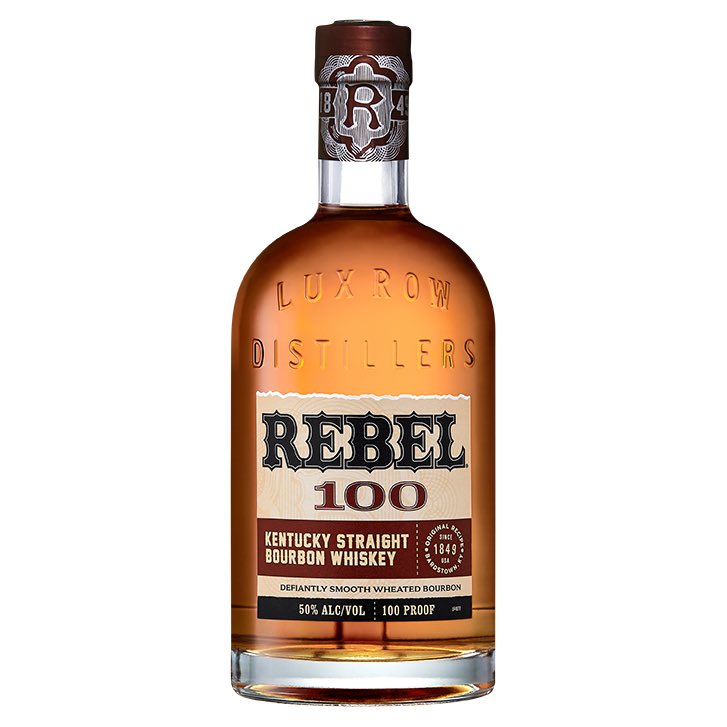
Indie Bottlings, US-style: Ezra Brooks 100 & Rebel 100

Lux Row Distillers are a Kentucky whiskey producer who have been "steeped in the whiskey business" for over forty years, but only got around to opening their own distillery in 2018. 

Now, a "Straight Bourbon" which doesn't carry an age statement must be at least four years old, which means that these two drams were not distilled by Lux Row and are what the US whiskey market refers to as an NDP brand (a Non Distilling Producer)

If they were Scottish then we might call them independent bottlings, if they were single malts, or just a new whisky brand for blends.

Indie bottlers in both the United States and Ireland seem to have a reluctance to be as open about this as Scottish bottlers, and brands like Whistlepig in Vermont or Hyde in Ireland have had a bit of a kicking over their less than transparent marketing and labelling.

I'm keen on total transparency in whisky, but I'm also cynical enough to know that we ain't getting it any time soon, so with these samples I'm happy to just cynically nod in the direction of Heaven Hill, Bardstown, or Kentucky Artisan and concentrate on tasting the drams.


First up is Rebel 100, a wheated bourbon (my favourite kind). The most famous example of this style is Pappy Van Winkle, but that's just silly money, and even my favourite affordable wheated, Weller 12, has vanished off the shelves in the last couple of years, so a decent replacement at £35 a pop would be a real boon.

On the nose it's perfume-y oak, with almond notes and a wee hit of black pepper. The palate is soft and rounded, with vanilla cream and sweet caramel. I find a touch of cinder toffee or burnt caramel in the finish.

In conclusion I'd say it's a fine example of the wheated style, although I'd like it to be rather bigger on the palate at 50%. Good.


My second sample is Ezra Brooks 99, which in contrast to the Rebel 100 is a more rye heavy style of bourbon.

The nose has a strong honey note, and a more restrained expression of the green spices that rye brings to a whiskey. There's an interesting raisin note, which is something I'd not be surprised to find in a Scotch, but seems rather unusual for bourbon. Over time a lovely gingerbread note emerges.

The palate shows a broad range of sweet rye flavours, with a slight bitterness in the finish. Interestingly, I also found a light soapy lavender note, and very interestingly for me as a lover of the funk, a slight earthiness.

In conclusion I found this to be a very interesting bourbon, particularly for the slight funkiness. Excellent.

These samples were provided by Lux Row Distillers & The Whisky Wire as part of a flash blogging event on October 20th 2021. You can read some of the other reviews via the following links.

http://www.mashtunandmeow.co.uk/2021/10/lux-row-distillers.html

https://therealdram.com/2021/10/20/rebel-100-v-ezra-brooks-99/

https://www.kaskwhisky.com/blog/lux-row-distillers

https://ginfuelledbluestocking.co.uk/flash-blog-with-the-whisky-wire-lux-row-distillers/

https://ocdwhisky.com/2021/10/20/ezra-brooks-99-proof/

And you can find more commentary on Twitter via the #LuxRowWhiskey hashtag.

Thursday, 17 September 2020

Single Malts of Scotland Bruichladdich 1992 26 Year Old

This is cask #3841, bottled at 54.9%, a sample very kindly provided by Elixir Distillers.


First impression: Fust! lovely old fust.

On the nose there's rich old malt and fust, and perhaps something savoury. It seems rather prickly for a twenty-six year old.

Yep, it's definitely rich, and smells properly old, and a little funky. Perhaps the herbalness of a tomato sauce as it cooks.

I do keep mentioning fust, don't I? It's a good thing too, in my book, but it does rather dominate. I don't see any of the lactic character one finds in younger Bruichladdichs.

On the palate it's sweet and thick and slightly bitter. There's an interesting spicy or peppery note, and something of bitter almond. I'd say the sweetness tends more to syrup than honey.

Over time the malt elements become stronger. It's persistently jaggy on the tongue and soft palate.

In conclusion I'd rate this whisky as good. There's a degree of complexity to it, and the fustiness (that damp-seeming aroma which reminds us of the delights of a dunnage warehouse) is great, but it's definitely a wee bit sharp for twenty-six years, and I don't think it really shouts Bruichladdich.

3+ (on a scale of 0: faulty / 1: poor / 2: adequate / 3: good / 4: excellent / 5: outstanding)

Wednesday, 11 September 2019

Whiskysponge Glen Moray Thirtysomething

These days Glen Moray probably has a rather better reputation than it had a decade or two ago, thanks to the tireless work of Distillery Manager Alumnus Graham Coull, so it's a wee bit harsh of the Sponge to label this bottle with an admittedly funny, but definitely backward looking, label.

Then again, the Sponge is cursed to know whisky-that-was better than pretty much everybody, to remember and lament the Heroic age of drams, so we should probably forgive him/her/it for referencing the time when Glen Moray was the unloved third child of the suitcase-vending owners of Ardbeg and Glenmorangie.

(And besides, who among us does not love a bargain? If, in 2005, you had the choice between some dubious United Spirits blend for £15 or a single malt with an age statement, no matter how overtly Chardonoid, for £18, of course you would buy the Glen Moray. Probably two bottles.)

All of this prefatory material is to prepare you to be disappointed, or at the very least, jaded. So that, should you be lucky enough to actually taste the whisky, your joy will be all the purer and more unalloyed.

I should explain, by the by, that this tasting note is a joint effort between myself and the Whisky Wuman. We tasted this Glen Moray courtesy of a sample from the Whisky Sponge, and discussed it as we were taking notes, thus simultaneously illuminating and polluting each other's thoughts.

So, throats having been cleared, and positions having been established, I have to say that this whisky is absolutely fabulous. It has aged beautifully in a none too active cask, it shows a marvellous progression from the ester-heavy youth of good Glen Moray to a mature, oxidised, yet still fruity, concentrated dram, a waxy, umami-laden delight which references Clynelish and the best of Knockdhu.

It's remarkably clean for a thirty-seven year old dram, with not even a hint of dunnage character (and it's worth remarking than dunnage character is highly desirable, so this bottling is all the better for being so very tasty without relying on that crutch).

If I had to euphemise it, SMWS-style, it would be, "Spiced Grilled Peaches In A Dusty Hessian Sack". The non-commercial five word tasting note, per Peynaud, is, "Waxy fruit. Waxy brown fruit". And the score, for those of you who like numbers, is (on a scale of 0-5): 6+.

Wednesday, 17 October 2018

Five Kilchomans

On September 24th George Wills visited the Good Spirits Co. in September 2018 as part of the Kilchoman Land Rover Tour. He's an extremely amiable chap, and a very entertaining speaker. These notes were written after the tasting had finished, whilst in conversation with a colleague, so I hope I wasn't too influenced by Mr Wills's bonhomie.


Kilchoman 100% Seventh Release, 50%
(having a half bottle of the previous batch of the 100% Islay to hand, it seemed only sensible to make the comparison. Although more than half full, it had been open for several months, possibly nearly a year, so I assume there's been some oxidation)
Nose: salty and coastal rather than overtly peaty (to be expected, given the lower peating level for Kilchoman's floor malted barley). Sharp, citric, & green. Banana goop. Waxy candles. A note of decayed vegetation.
Palate: Rounded & oily. There's plenty of vanilla, pepper, and an enjoyable funky note which I think relates to the decayed vegetation I found on the nose.
Conclusion: Tasty, but also somewhat raw. I like the green aspect.

Kilchoman 100% Islay Eighth Release, 50%
Nose: again, it's initially salty and coastal before sweet mellow peat comes in to play. There's a touch of the waxy candles found in the Seventh Release, but it ain't so strong.
Palate: fruity and rounded, with gentle peat and some hard to tease out (hence intriguing) funk. The finish is a bit aggressive.
Conclusion: I think I prefer the Seventh Release - but perhaps just because it's had a good airing?

Kilchoman Loch Gorm 2018, 46%
Nose: Wow, this is really funky. Kinda stinky like high ester Jamaican rums (Dunder!). Really, this is verging on Ledaig levels of funkiness. There's a mineral quality which I asssociate with sherry barrels too - unfortunately, I can't find a better word for it than petrol. (petrol as a tasting note is usually associated with the presence of terpenes, most often in relation to Riesling. But terpenes are found in sherries - see here and here for more information). There's also the classic sherry barrel note of struck matches. And lots of funk.
Palate: it's very sweet, but that's balanced by the salty character of the peat. It's also slightly on the sulphurous side - well within my sulphur comfort zone, but definitely not for everyone. Alongside the typical Kilchoman grassy funk, there is allso plenty of caramel and chocolate.
Conclusion: I love sherry and peat! This is a great example of the style, only let down by being a bit nippy in the finish.

Kilchoman Land Rover Tour 2018, 59.8%
(In other words, cask strength Machir Bay)
Nose: posh smoky vodka. Peat and funk. New make. Young, raw. Hairspray! (a note I find from time to time in Brackla. I have no idea what the common factor between Kilchoman and Brackla could possibly be). There's still plenty of the Kilchoman grassy funk.
Palate: Youthful. Raw. Hot and salty. With water it becomes much sweeter and less raw
Conclusion: what was that Ian Banks book again? Oh yes, "Raw Spirit".


Kilchoman Sauternes Finish Cask Sample
(we were given this in lieu of the forthcoming Sauternes finished release, which isn't bottled yet. And yes, it's not in the picture. Nevertheless.)
Nose: sweet grassy smoke. Very clean - there seems to be rather less of the Kilchoman funk in this one. There's an oaky spiciness which reminds me of Lagavulin. With water it becomes syrup-sweet, and the peat smoke dies down.
Palate: wow, this is super sweet - icing sugar, jelly babies (yellow ones). It's light bodied and rather nippy. Interestingly, the aftertaste is much more about the savoury peat, which (unusually) is verging on umami. With water it seems to go from syrup to toffee, almost  into treacle. It's still nippy, and the oak spice has veered off into Oddfellows territory. The finish is a much more familiar earthy peat.
Conclusion: a decent dram, not too complex. Not my kind of whisky, apparently.

Of the five drams, I think my favourite on the night was the 100% Islay Seventh Release. I suspect this might be as much to do with what I'm enjoying at the moment, which seems to be veering slightly away from monster cask strength whisky.

I've had a bottle of the Land Rover Tour Machir Bay before (here's a video review by the Whisky Wuman) and I reckon I liked that quite a bit more than this year's.

If you like your peaty malts to have a bit of funk about them then you should definitely try Kilchoman. Also, they have absolutely the best artwork of any distillery showing how whisky is made. Check it out here. I can't find it! I do hope they haven't ditched it. Awww man, I think they've ditched it.

Friday, 28 September 2018

Insert Punning Title Here

Cococtomore? Octoless? Concoctomoretion?  It's not working, is it?

I've been playing around with Rob Roys and variants thereof for at least the last six years, but in 2018, encouraged by The Whisky Wuman and other colleagues, I've been branching out into highballs and other things.

This article in the Independent, with its vague reference to "smoky whisky, coconut water, and lime juice" intrigued me. But rather than get in touch with Emily Chipperfield or Nuala Bar directly to ask for a recipe, I just set about trying things.

Having some Octomore to hand it seemed entirely reasonable to use that as a starting point.

I stuck to a straightforward theme of Octomore / coconut water / lime juice / bitters, only varying the proportions of each and the type of bitters.

Owing to not actually having any ice the first time I made this (and thus resorting to the time honoured technique of bunging everything into the freezer for a bit before assembling the drink) I discovered that not shaking seems to give a more interesting drink. Yes I know, I should have dry shaked (dry shook? dry shaken?) the chilled ingredients. I didn't. Get over it.

It's probably important to note (for those of you fool enough to try this at home) that "more interesting" doesn't necessarily mean better. Octomore is a weird, chameleon liquid, and lime juice makes your palate sit up and pay attention. When you combine the two the result can be startling.

Here's one version of the drink, with my notes on how it turned out. If you want the real funk, use less coconut water.

~20ml Octomore Discovery 2
~10ml lime juice
~120ml coconut water
3 dashes Bitter Truth Tonic Bitters

Stir all ingredients together. Serve in an ice filled rocks glass.

On the nose the coconut comes through nicely. This is a long, fairly weak drink, but when I used lesser quantities of coconut water it was just getting lost.

On the palate there's a nice balance of sweet / fatty / nutty coconut notes with the sharp lime and the earthy / salty / not quite grassy notes of the Octomore.

This is the friendliest version of the drink that I've discovered so far. Using a smaller quantity of coconut water gives a much more funky, feral, wild result: whether you want that or not is a question only you can answer - by making this drink for yourself. Go do it now!

Monday, 10 September 2018

A D Rattray Samples


Balblair 2011, 59.7%
A bourbon barrel that's been PX finished. I didn't enjoy this at all (but then, as The Dandy says, Balblair doesn't really come into its own until its mid teens). The nose is painfully nippy, with an odd mixture of raw wood and brown sugar. The palate is sweet, peppery, and raw. Sandpaper and sawdust. Ouch. Poor

Strathmill 2006, 58.1%
Another bourbon barrel. It seems rather quiet in comparison to the whiskies around it. It's not unpleasant, but having recently had a couple of lovely crisp, malty Strathmills, this is merely humdrum. There's little to fault here, but no fireworks either. Sort of Good

Balmenach 2010, 57%
Another sherry finish, although I didn't note what kind of sherry. There's a pleasant cooked note, as if one were in a kitchen where boiled sweets are being boiled. It's not at all spirity. To taste it is in fact rather on the hot side, but the flavours are really interesting. Savoury, with some beery malt, a hint of sulphur, and a very pleasant finish. Very Good

Macduff 2009, 57%
From a bourbon barrel. The classic Macduff nose of creamline toffee, fudge, or toffee pennies (depending on which of those your family favoured when you were growing up). The palate follows
through with exactly the same notes. The thick oily texture and its simple sweet nature make this a lovely comforting dram. Good

Tamnavulin 2009, 59.4%
From a bourbon barrel. At the start of the year I had a young Tamnavulin-Glenlivet from the Seventies, and this rather reminds me of that. The modern one isn't nearly as fruity of course, but there's a floral elegance to it which is delightful. Pea blossom and greenery - it's fascinating. The palate is soft and sweet, a kind of flowery toffee. The only thing which keeps this from being an outstanding whisky is a slight bitterness in the finish. Excellent

Glenrothes 1996, 51.9%
Unusually for Glenrothes, this is a bourbon barrel. It still somehow has that cello seriousness which a lot of Glenrothes exhibits.

I realise that's not very helpful, so let me explain. Glenrothes, like Mortlach, takes very well to sherry barrels, but unlike Mortlach, which seems to come from bourbon barrels fairly often, pretty much all the Glenrotheses (Glenrothi?) that are ever released are sherry barrel matured. Mortlach, from a bourbon cask, tends to go to a bright, lively pizzicato violin fruitiness. This Glenrothes hasn't done that, hence the comparison to the cello.

The palate is all soft rounded sweet toffee. Very Good

Sunday, 17 June 2018

Daftmill Inaugural Release

The most exciting whisky release of 2018, despite the high cost, is undoubtedly the first official bottling from Daftmill.

I was lucky enough to taste a wee sample of it, brought back from the launch event by colleagues who were in Fife to see the first bottle opened, and then tasted it again the other night at Glasgow's Whisky Club.

Most new distillers have a pressing need to bring in some cash to recoup their outlay, but the Cuthbert brothers were in the fortunate position of growing barley and also of having some old buildings going spare that could be used for distilling and warehousing. Hence, despite the endless questioning as to when it might be bottled, Daftmill has only now been released, as a twelve year old (I would have asked the question myself, but we were forewarned by Francis Cuthbert not to do so, on pain of eviction from the distillery).

And so to the liquid. Bottled at 55.8%, this is a vatting of three casks filled in December 2005, all first fill ex-Heaven Hill bourbon barrels.

nose: white chocolate or chantilly cream, soft, but also somewhat spirity. Is that mocha coffee?
something sharp and grassy - perhaps a minty note? The oak spices are beautiful.

palate: it's malty, dry, and rich, getting more and more malty in the finish. The texture is slightly oily. There are flavours of coconut, loads of sweet boiled fruit notes, plus something fresh - green apples and mint I think.

conclusion: it's a very good twelve year old. Is it outstanding? I'm not sure I'd go that far, but it is lovely. Is it a Lowland whisky? Well, it certainly doesn't conform to my mental model of that style. It's too rich and malty, although there is something light and grassy in there somewhere.

Is it worth £210? Of course not, but while whisky's equivalent of tulipomania continues, it makes sense for Daftmill and Berry Brothers to benefit, rather than the *!?@$** flippers and auction houses.

Future releases will consist of a regular Summer Distillation and a Winter Distillation, plus occasional single casks. The regular releases will be priced around the £100 mark - still expensive compared with, say, Glenfiddich 12, but considering how Daftmill is made, not at all unreasonable.

£210 is far beyond my whisky budget, and indeed the consensus at the club was that most people wouldn't buy it. So much the better, then, that we were able to taste it as a group.

Thursday, 14 June 2018

A New Dufftown

Dufftown is one of three malts bottled with near-identical labelling, and in a slightly unusual hip-flaskish bottle. Why this should be the case is a matter for another day.

Aside from the twelve and eighteen year old expressions, there are some fancifully named releases without an age statement. Similarly, this latest expression lacks an age, but bears a more traditional or old-fashioned name.

In full then, it's The Singleton of Dufftown Malt Master's Selection.

If you have the patience, you can click or tap on the picture of my tasting note and read it in full. For those of you in a hurry, here's the executive summary, plus analysis.

It's a gentle, easy drinking, well balanced dram. I found flavour notes of:-

  • chocolate sweeties (Chelsea Whoppers)
  • clootie dumpling (specifically, the outside bit. If you've never enjoyed this delicacy, then I'd make the comparison to flapjacks or raisin-studded biscuit dough)
  • lavender & rich tea biscuits
  • more chocolate sweeties (orange matchmakers)


In other words, a mild mannered refill sherry barrel whisky.

I think many seasoned malt drinkers would find it a bit too light, or would use it as their warm-up dram. On the other hand, if you're looking for a change of pace from Johnnie Walker but want to keep that ultra-smooth palate and texture, then this is for you.

Sunday, 20 May 2018

Some Grain Whisky Samples


Inspired by a recent vlog from Aqvavitae about samples, I pulled these four grain whiskies out of the cupboard to taste, as well as a few other samples to give away. As Roy says in the video, if someone has gone to the bother of sorting you out with a sample, you shouldn't leave it to gather dust.

So what do we have (let me translate those spidery labels for you)

  • A D Rattray North British 25 Year Old (unknown strength)
  • Whisky Barrel Dumbarton 30 Year Old 1987-2017 56.5%
  • Sovereign Cambus 1985 (age unknown, strength unknown)
  • Whiskybroker Cambus 25 Year Old 1991-2017 56.9%


I've tasted the Whiskybroker Cambus and know I like it, but what of the others?

North British in my mind is a solid distillate but I've never had one reach the heights that Cambus or Invergordon or Garnheath can manage.

Dumbarton is an unknown unknown. Never tasted it, I know nothing about it, people never seem to talk about it. So....

A quick sniff along the glasses and I think I still like the Whiskybroker Cambus best, perhaps because of its sherry overtones. The Whiskybarrel Dumbarton smells interesting but perhaps not very friendly, the Cambus is worryingly vodka-like, and the North British is what I'd call canonical grain whisky.

Taking them one by one, here are my tasting notes.

A D Rattray North British 25 Year Old (strength unknown)
nose: mild, sweet, even a little wattery. Over time there's more oak spice and increasing woodiness.
palate: rich and spicy, with orangey boiled sweets, then a roasty toffee note. It's hot in the finish.

Whisky Barrel Dumbarton 30 Year Old 1987-2017 56.5%
nose: light, clean, sweet, with a burnt note. Cinder toffee. A green note, and slightly mineral. With water it gets really complex, herbal, old fashioned, and also old.
palate: light and fairly dry. The alcohol is grippy. There's sweet coconut cream and/or very creamy condensed milk. With water there's a suggestion of smoke (which must be from the barrel somehow). It's less herbal than the nose and slightly bitter in the finish.

Sovereign Cambus 1985 (age unknown, strength unknown)
nose: rather boozy - the ghost of vodkas past. A wee bit of fust, plus some creamy toffee. Mellow oak spice, but definitely boozy.
palate: mild and sweet, with vanilla. With water it becomes soft and rounded, with juicy sultanas. Cake and a burnt toffee note. With another splash of water it reminds me of an oaked Chardonnay.

Whiskybroker Cambus 25 Year Old 1991-2017 56.9%
nose: rich and sweet, like boozy brandy. Spicy (again like brandy), with almonds and a clear sherry note. Herbal and complex. With water, the sherry grows stronger, and a baked apple plus sultanas note appears. It's very sweet and welcoming.
palate: Sweet brown sugar, and sherry (fino I think!), plus crème brûlée. It's complex, soft, and welcoming. With water a citrus note appears, plus royal icing and nutty toffee. Adding more water really emphasises the sherry notes.

It's fair to say that the size of each of these tasting notes reflects how much I enjoyed the dram, and perhaps also how good each one was. I found most enjoyment in the Whiskybroker sherried grain, but I'm so very glad I had a chance to taste the Dumbarton, which I'd say was interesting and challenging. The Cambus was a disappointment - I've had far, far better - and the North British was perfectly acceptable, the vin ordinaire of the line up.

Now, let me go and label up those other samples...

Sunday, 5 November 2017

What's The Point Of Ardbeg An Oa?

For more than two and a half centuries Scotch Whisky—I mean the industry, not the drink itself or the culture—has moved in cycles or waves of popularity, expansion, and prosperity for distillers, followed by slump and closures.

Some producers have taken advantage of the current upturn of the wheel to try and move their whisky up-market. In the (very successful) case of Ardbeg, this move began, I seem to remember, in the early 2000s, and over the course of a few years the price of Ardbeg Ten drifted upwards relative to other Islay brands. The invention of the annual Ardbeg Day release, and the introduction of Ardbeg embassies helped push the price increases, by building an air of exclusivity.

I suppose Ardbeg can't really be faulted for this. After all, corporations are obliged above all else to maximise their profits, and Louis Vuitton Moët Hennessy operate in the luxury market, where the price and the utility of a good are but loosely connected, so why not see how far you can go?

So we have had a succession of releases of varying quality, some excellent, some anodyne, none sensibly priced, but one thing that all the previous Ardbeg Day specials did have was a decent level of the sweet smokiness that helps to place Ardbeg in the front rank of Scotch Whisky distilleries.

And this is where I found myself bamboozled by the new permanent addition to the core range, An Oa. It just doesn't have that same intensity of peat.

The nose in particular is very mild mannered, to the point of blandness. Honestly, it's faintly coastal, and that's it.

The palate is much better: sweet and smooth, with salty peat. It's very fruity too - lovely yellow fruits (yellow brambles, if they existed). The aftertaste is clean, peaty, and a little salty. But still and all, it's mild.

Ardbeg-lite.

And there's when I realised what the point of Ardbeg An Oa really is.

It's the brand extension for people who don't particularly care for smoke. Just as Brockman's is a gin for folk who dislike juniper, or skittle vodka exists to hide the unpleasant taste of alcohol, An Oa opens up the world of peaty drams to a whole bunch of people who wouldn't otherwise buy them.

So there you have it. Mystery explained. LVMH aren't about flavour, and it doesn't make sense to think about their products like that, or to question the introduction of an Ardbeg which doesn't taste much like Ardbeg.

And with that question resolved, I'm off to drink a Ledaig.

Thursday, 7 September 2017

The Royal Brackla Appreciation Society

Royal Brackla is never going to be a star of Scotch. The style of malt it produces—which these days is very sweet, like toffee pennies—whilst delightfully easy to drink, lacks the complexity of the truly great whiskies.

And the current owners, Bacardi, despite their supposed intention to raise the profile of their distilleries, seem to be somewhat indolent in their approach. They took over the "Last Five Great Malts" at least a decade ago, and the relaunch staggered on through 2015 and 2016, which pace is never going to set the heather on fire.

Despite these grumblings, I am a member of a small whisky club1 , the Royal Brackla Appreciation Society. The society was founded one night after we had a dram of the old 10 Year Old, and found in it a surprising—and surprisingly delicious—herbal/earthy/dirty note which we couldn't recall having encountered previously in a malt whisky. It was such an intriguing flavour that we were moved to try other Bracklas, but alas!, as yet we haven't found it again.

Last night's fine Bracklas did include one which hinted at the stink we are always looking for, and we also discovered a new whisky aroma note, as well as gaining a useful insight into how the Scotch Malt Whisky Society names its bottles.

We started off with a sample of 16 Year Old Brackla drawn in 2014 and intended for the US market, presumably in the run up to the launch of the range. This was pure toffee pennies, sweet, smooth, supremely easy to drink. If it were fruity too, then it's be easy to mistake it for VSOP Cognac, and I should think it's probably aimed at the same market; Christmas presents for clients, once a year whisky drinkers. For us, it was a nice wee palate warmer.

Next up was the most interesting dram of the night, a mini of whisky distilled in 1974 (and, according to the interwebs, bottled in 1990). It was much maltier than 90s/2000s distillate; maltier in a very toasty, flapjack, roasted malt fashion. And after a while, a hint of the elusive stink started to emerge - if only we'd had a bigger sample.

(We did a quick search, and full bottles are going for £200-£300, which is rather more than we care to spend. We like Brackla, but come on, it's not worth that money. And that's why we don't just purchase endless bottles of the old 10 Year Old at auction. Prices are silly.)

Third dram was another Gordon & Macphail Connoisseurs Choice bottling, from 1997. Very much in the modern style of soft, sweet toffee, but we also found, after we'd tried the next one, that the 1997 had acquired a sweaty note.

Whisky number four was a Scotch Malt Whisky Society bottling, numbered 55.22 and named Backstage at a Burlesque. It had the toffee pennies—half a crown's worth at least—but it also had a distinct hairspray note, and an equally distinct note of sweat. And as I say, after trying this one we went back to the 1997 only to discover that it too was sweaty.

You do have to applaud the SMWS for their cunning. Finding hairspray and sweat and accurately, if slightly disingenuously, reporting it as Backstage at a Burlesque.

We finished off with another SMWS bottling, In the Shade of the Fruit Tree. Which certainly lived up to its name, but was somehow unexciting.

All told, an interesting and varied set of Bracklas. I suspect that the reason I liked the last one least was down to it being the cleanest. It's generally the case that I like my whiskies slightly dirty, and I'd say that counts double for Royal Brackla. The search continues.

1. When I say, "a small whisky club", I mean that I comprise a third of the membership.

Wednesday, 6 September 2017

Tasting Note: Kilkerran 12 Year Old

I was very excited when the first Kilkerran Work In Progress was released. I bought a bottle, and was then rather disappointed by it. I've tasted every Work In Progress since, and I've come to the conclusion that Kilkerran shouldn't be drunk young.

Indeed, while I'm moderately keen on the 12 Year Old, I have a feeling that it'll be much better once it gets up to 15 or 16. Of course, this won't stop me drinking the 12, for reasons given below.


The nose is herbal or grassy. It's also sweet - somewhere between honey and syrup. I do find it a little bit spirity, alas.

Initially it seemed very grassy or hay-like, perhaps even barnyard-y, but over time it becomes less grassy.

There is a wee bit of iron or old engines (what I call the true Campbeltown goût). There's the merest trace of oak spice - these'll be refill casks by the taste.

The palate is rounded, easy going, not obviously peated in any way. There is a little woody spice, but it's very gentle, and really the grassy notes dominate.

In conclusion: I really like the texture, which is slightly mouth coating, although not quite what you could call oily.

It's interesting to compare this dram with my notes from a year ago. It seems clear to me that the legendary Springbank batch effect is in evidence. This year I can't find even a trace of peat, whereas last year I noted, "tangy sharp brown sugar smoke".

I like that this malt is not coloured and non chill filtered, and from a family owned distillery which does everything on site. Given the extra costs involved in the small scale production of Mitchell's Glengyle, I reckon it's a total bargain.

About Kilkerran
The distillery is Glengyle, but the brand is Kilkerran, for tedious legal reasons.

Glengyle makes lightly peated (except when it's not) malt by double distillation (except when it's triple distilled).

Glengyle distillery operated from Victorian times through to about 1930, when it, along with nearly all of the Campbeltown distilleries closed. It was refurbished and reopened in 2004 by J&A Mitchell, owners of Springbank, and staff from that establishment run Glengyle on a part time basis.

The ostensible reason as given by J&A Mitchell for the re-opening of Glengyle is that the Scotch Whisky Association was planning to introduce a rule that a whisky region could only be a region if there were three or more distilleries operating in that region.

This has always seemed like nonsense to me, and I've never been able to find any documentary evidence for it, but I'd be happy to be proved wrong. Anybody?

Monday, 26 June 2017

Whistlepig Farmstock Crop No. 001

It's fair to say that Whistlepig have had a few hiccups along the road, and the company founder, Raj Bhakta, seems to have a knack for getting himself into hot water. On the other hand they have also been very highly praised for some of their whiskies. While I'm definitely in favour of transparency, which arguably has been a bit lacking with Whistlepig, it remains the case that what matters most is how a whiskey tastes. And this whiskey tastes rather fine.

The Vermont based company have only been distilling their own whisky for a couple of years now, so I guess it'll be a while before they can offer something which is 100%, grain to glass, Whistlepig. In the meantime, they have released Farmstock #001, which I'm told is a blend of their own distillate with bought-in Canadian and U.S. rye.


Nose: There's quite a bit going on here. The rye is mild and sweet, like beery rye bread, or rye and ginger biscuits (are they a thing?). It's also fruity, in a sappy green apple kind of a way, then there's an emulsion paint note. Before you stop reading, I should explain that "emulsion paint" is an aroma I often find in Scottish Grain whiskies and bourbons. It's not a bad thing, it's just a Quercus Alba thing that I haven't figured out the correct name for yet. I like it when I find emulsion paint in a whisk(e)y. The whiskey is very soft on the nose and not spiritous at all.

Palate: sweet, rounded, and mouth coating or slightly oily.  Mild nutty rye bread spice, burnt bread, well fired Scotch morning rolls. After a while it becomes much more fruity: specifically apples and pears. Towards the finish it dries out a little, and develops a prickly warmth. With time I also found a mineral quality in it, which I liked.

Conclusion: There's lots of soft rye spice, but rather less of the toffee, coconut, and caramel notes that white oak imparts to most American whiskies. It's also much fruitier than I expected it to be. Whilst it's not life-altering, it's a very enjoyable drop. I reckon that it's over-priced, but that likely reflects the hype surrounding Whistlepig. Perhaps Mr Bhakta belongs to the "There's no such thing as bad publicity" school of thought.

Thursday, 8 June 2017

Bottle o' Ridge!

When I was starting out as a booze merchant sixteen years ago, Ridge was a popular 'fine wine' choice with punters who had learned wine via such gems as the Penfold's range of affordable, full-bodied, fruit-forward Australian wines, and who preferred their soft jamminess to the dryer, more restrained style of the Bordeaux Crus Classé . The junior expressions were affordable enough that some of our more affluent customers could float in of a Friday evening and casually utter—what had become something of a staff catch phrase or in joke—"bottle o' Ridge please".

So even though my tastes lean more towards the European classics, I have a soft spot for Ridge. Turn to whisky and matters become more complicated. Red wine finishes are most definitely not to everybody's taste. Fortunately, I do like them, and am therefore the ideal person to review this one.

What we have here is the Glenrothes Wine Merchant's Collection 1992 24 Year Old Ridge Wine Finish Cask #08, which retails for £200. It is bottled at a natural strength of 55.1%, and has been finished (for six months? A year? Who knows?) in a Zinfandel cask, although we're not told which vineyard. Yes, it very likely wouldn't make much difference to the flavour of the whisky, but I'd probably look more fondly on it knowing it was Geyserville rather than Lytton Springs.

As I understand it, Glenrothes' reputation stands higher in Europe and America than in the UK, but nevertheless £200 seems quite expensive to me, even allowing for the expense of the fancy-schmancy barrel. With that grumble set to one side, here are my notes.

Nose: Vinous, but also rather spirity. Berries (generic berries. Or perhaps I mean Genericberries). Not malty. Adding a little water makes it more spirity (as is often the case), and brings out oak top notes. More water reveals dry, earthy notes, and leaf litter (sous bois if you want to indulge in the sort of Wine Spectator vocabulary that wines like Ridge seem to provoke). There's definitely something of mushrooms and wine cellars going on.

Palate: Thick and sweet, fruity, ripe, and red. Rather port-like, but with a faint bitter note in the finish. Water brings out more red fruits, and an earth or mushroom note which wine barrels often give. After a while a lovely almond pastry flavour develops.

Yet more water makes it very soft and easy to drink, and brings out high toned, perfumed, oak spices, along with a faint reminder of Edinburgh rock. It's fortunate that this whisky takes water so well; after twenty-four years and at natural strength of 55.1%, I do think it ought to be a tad less spirity.

Conclusion: This is an excellent 'sweetie' of a dram, with the proviso that you have to like red wine finishes. Glenrothes produces spirit of a very fruity character which in this case works well with the wine influence.

Zinfandel often has a character akin to Port, and that, I think is a useful comparison if you're not a wine drinker, but have tasted Port-finished whiskies. If you like such malts, then this one's for you.

Wednesday, 26 April 2017

The Manzanilla of the North

The blessèd Michael Jackson knew how to turn a well formed phrase, and he was the writer I turned to when I was first trying to learn more about Scotch, but some of the things he wrote about whisky have never made sense to me. 

I've always thought that his description of Pulteney as the Manzanilla of the North was one such utterance, a phrase coined more for its similarity to "the Athens of the North" than for its aptness. And I am fairly sure that the phrase was coined by Jackson.

For example, in The World Guide to Whisky (1987) he says, "The whisky, called Old Pulteney, has been compared to a Manzanilla", but neglects to tell us who was doing the comparing.

But this bottle, a Cadenhead's 11 year old bottled at cask strength, from a bourbon hogshead, has given me pause for thought.

Initially it merely seemed like a whisky which had been bottled too early, a harsh raw dram lacking in pleasure, and very awkward alongside the handful of well aged malts also tasted that evening. But that brash, abrasive character is coming in my mind to seem more and more like the saltiness of youthful fino from Sanlucar. 

I recall that Jackson began writing about whisky during the last boom, at a time when demand was running ahead of supply, and before the filling of the whisky loch in the Eighties led to many producers promoting well aged expressions as the norm.

In the World Guide to Whisky many of the expressions he describes are fairly youthful - Highland Park, Strathisla, Rosebank, and Blair Athol all at eight years old, Balblair as a five year old, Glenfiddich Pure Malt without an age statement, and plenty of others.

The expression of Pulteney included in the Guide is the eight year old bottled by Gordon & Macphail. I wonder if the whisky I tasted last night - youthful, with little cask character, rather abrasive - is the modern equivalent of that early eighties expression?

I suspect that I'll never have an answer to that question, but at that time there wasn't anything like the same level of interest in cask management as there is today, and I reckon it's at least a plausible suggestion to say that the malt that Jackson tasted and described was dominated by distillate character, just like last night's dram.

And whilst I'm waiting for an answer, I shall go and reread Jackson in the light of my Pulteney revelation.

Sunday, 9 April 2017

Springbank Private Bottling for Distillery Visitors 2017

So I just drank a £50 dram.

Which is more a reflection of the weird state of Scotch in 2017 than of the true value of this whisky.

But that's not the reason for this post, ho no missus. Nope. I'm writing this because Springbank seems to provoke logorrhea in a way that other drams don't. Look at this:


Can you tell that I really liked this whisky?

Here's the transcription, for those of you using Lynx or another text-only browser.

Nose: malt and iron. age-patina-ed old iron and brown sugar. If you took a handful of long grass (forage, destined to be hay) and held it tight to an old horseshoe until it had become damp. That. Grubby small children, but your own, beloved children, not anyone else's. Faintly, a curry spice (cumin?)

Palate: Sweet and malty, but somehow suggesting sweeties made from seaweed. A salty-sweet finish. Sweet round malt, beautiful brown sugar (muscovado, the darkest of sugars). Oh, and sherry.

Conclusion: the perfect dram for my mood tonight. A great Springbank.

I absolutely love it when this happens. To be honest, this is why I drink. I don't care for the other effects of alcohol, the drunken-ness or the hangover, but when the booze provokes me into wordiness, oh man, I'm so happy. I don't mind that these words likely don't mean much to most of you. The process of turning ethanol-plus-congeners into letters on a screen makes me unreasonably happy.

PS If you haven't already arrived at this conclusion, then let me say that the take-away from this blog post is that you need to get yourself to Campbeltown and do the tour, just so you can have the whisky.


Friday, 7 April 2017

Benromach 1973

It can be difficult to let go of one's prejudices, and this is doubly the case when one is tasting (that's why blind tasting is such a useful tool).

Alas!, when I first tasted this wee sample at the end of last year, I let my mental picture of pre-Gordon & Macphail Benromach interfere with my perception of what I was actually tasting, so that it seemed, if not humdrum, then perhaps pedestrian, not worth it's £1400 price tag.

So I was pleasantly—nay, delightfully—surprised when I polished off the last of the sample tonight. Why? In a word, rancio. This is such a rare thing to find in a Scotch, and it's such a delicious flavour. Especially when it's combined with maltiness rather than the fiery fruit of brandy.

Now, I've described rancio as a flavour, but it's perhaps more accurate to say flavour modifier. In very old brandies of good quality, the fruitiness will sometimes take a turn to the dark side, with suggestions of over-ripeness or a faint hint of hothouse rot.

By contrast Scotch, perhaps because of the cold climate in which it matures, is more likely to acquire a slight fust, something which speaks of the damp, earthy warehouses and old oak casks in which it has aged.

So as I say, it was a delightful surprise to taste a malt with rancio. Aside from that, there was some of the fust that old whisky takes on, as well as the faintly grimy, garden-shed-and-old-engine-oil character that I only ever find in Springbank, Benromach, and some other whiskies distilled in the Seventies or earlier. It wasn't a very intense dram, but oh! such lovely flavours.

(Thank you to Benromach and to Steve Rush of the Whisky Wire for the sample)

Thursday, 23 March 2017

Youthful Malt Not Considered Harmful

The cyclical nature of Scotch Whisky sales, forever moving from boom to bust to boom to bust, has occasionally led the industry into difficulties of its own making.

The slump of the eighties led in turn to an oversupply in the oughties of well aged malt, which the industry attempted to tackle by emphasising age as the one true mark of quality.

The (inevitable?) consequence of that tactic, of course is that during the most recent boom many producers have been reluctant to admit that they are bottling younger whiskies, resorting instead to the modesty blanket of a fanciful brand name, and taking advantage of the fact that they aren't actually obliged to state the age of a whisky.

This has led to much public argumentation between, broadly speaking, two camps. On the one hand there are those irate persons, generally not employed in the industry, who consider Non Age Statement whiskies to be a bad thing, and on the other the more emollient voices, often of those in the trade, who defend the practice as a sensible response to a shortage of aged stock.

(It has also, amusingly, led to Compass Box's clever dancing round the rules, and to Bruichladdich's rather more low-key activities in the same vein. Both of which I consider to be a good thing.)

But few bottlers have bitten the bullet and released young whiskies with prominently displayed aged statements. Which leads me to Càrn Mòr.

Càrn Mòr is the single malt brand of Morrison & Mackay, the Perthshire independent bottler and erstwhile maker of whisky cream liqueurs. I'm a fan of their whiskies for several reasons. Their labels are admirably clear and informative; young Peter Mackay, their envoy in the West, is an entertaining and charming fellow; their bottlings offer, in my opinion, good value for money; and most importantly, they generally bottle good whisky.

I expect I'm wrong (and please do correct me) but I believe they were the first bottlers in recent times to offer a malt with a '4' prominently displayed on the label, on a Glentauchers distilled in 2010 and bottled from a sherry puncheon in 2015. That was a fine dram; fiery, but also packed with marmalade and demerara sugar flavours, and ridiculously good value for money.

Tonight's bottle, by contrast, is a venerable five year old. It's from the blessed Glenburgie, and is a very fine example of the fruity style at which that distillery excels. The nose immediately shouts out "Fruit!" at you, and a deeper sniff reveals it to be Opal fruits. The palate is light, soft, fresh , and fruity. It's not complex, and there is a wee bite to it, but that fruit is just charming. A lovely wee dram, and very sensibly priced too. Oh, and it's really rather fruity.

I suppose I need hardly say that I wish more bottlers would follow the example of Càrn Mòr. I'm not that fussed about the age of a whisky, as long as it tastes good, but I don't care for smoke and mirrors. Or heritage and haggis and no age statement.